

Spray foam insulation explained
While insulating your home is a smart way to stay cozy and cut energy costs, recent headlines about spray foam insulation have raised concerns.
To help you separate fact from fiction, our energy experts have put together this guide exploring the risks, benefits, and essential facts you need to know about this specific material.

What is spray foam insulation?
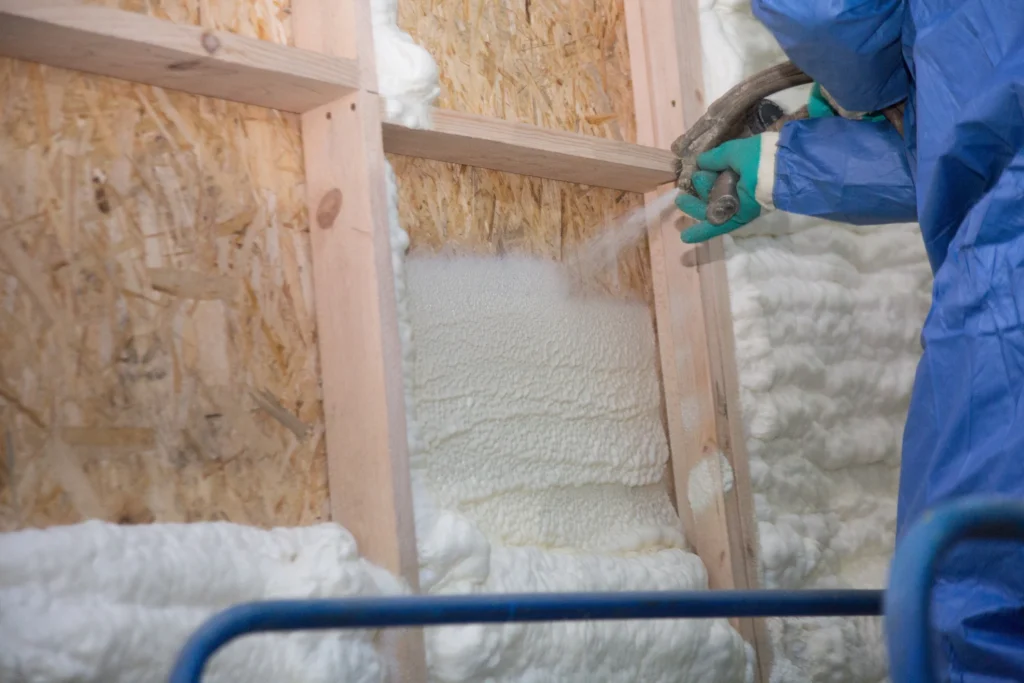
Spray foam is a liquid polyurethane insulation applied directly to surfaces using a spray gun. Once applied, the liquid expands and sets into a solid insulating layer. Because it is applied as a liquid, it is often faster to install than traditional solid materials and can easily reach tricky, hard-to-access areas.
Spray foam is a versatile material commonly used to insulate:
- Roofs
- Walls
- Floors
There are two primary versions of this insulation available: closed-cell and open-cell, each offering different structural and thermal properties.
How is spray foam used?
Spray foam is a versatile solution used to insulate various parts of a property:
- Roofs: For homes with pitched roofs and uninsulated lofts, foam can be sprayed directly onto the underside of the sloping roof. This serves as an alternative to laying mineral wool insulation at the joist level (the loft floor).
- Walls: Foam is often used to fill empty cavity walls, especially in instances where standard cavity wall insulation is not deemed suitable.
- Floors: It can be sprayed onto the underside of suspended timber floors. This is often done using a robot to access the underfloor space, providing a much less disruptive alternative to lifting floorboards and fitting insulation from above.
Frequently Asked Questions
The majority of concerns raised by homeowners and industry professionals about spray foam insulation relate to roof applications. In many cases, these issues are linked either to the product itself or to how the system has been installed.
When spray foam is applied directly to the underside of a roof, it can partially seal the timber structure. If water enters the roof through a leak and becomes trapped, it may eventually lead to timber decay. Even without a visible leak, condensation can form and create similar moisture-related damage. However, this risk is generally lower when open-cell foam products are used.
Roof timbers that have been covered with spray foam are harder to access and replace if repairs are needed. The same challenge applies to roof tiles or slates, particularly when there is no felt membrane or protective layer separating the foam from the outer roofing materials.
Our Professional Accreditations